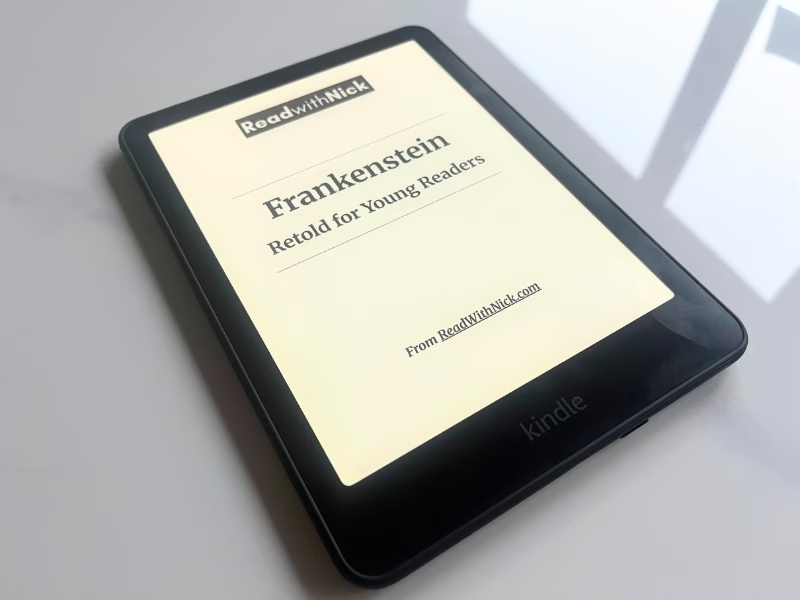
Children are smarter than we think. But are they ready for Frankenstein for young readers?

The story of Frankenstein has challenged readers to think about difficult moral questions for more than 200 years. In fact, it’s so embedded in our culture that many children will recognise Frankenstein without actually knowing its origins.
Here are a few misconceptions that people usually make about the story:
- Frankenstein is the scientist, not the creature.
- The creature is intelligent and articulate, not slow and bumbling.
- The true villain is still debated.
The last one depends on who you hold responsible for actions: the creation, or the creator.
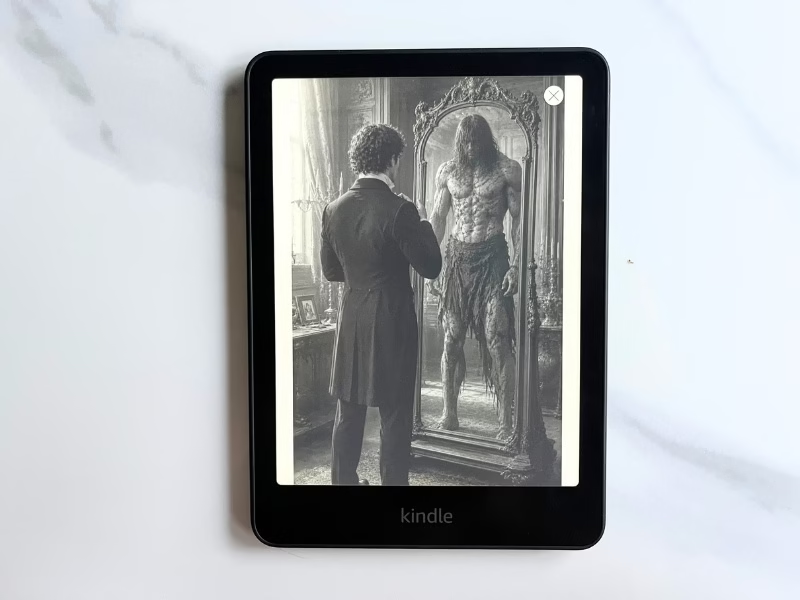
If adults can still debate the moral questions in Frankenstein, perhaps children are ready for them too. I wanted to use the story to spark more meaningful discussions with my own children during storytime, but I couldn’t find a version that was suitable for their age (5 and 7).
I already had a positive experience after they read my own version of The Iliad, so I decided to create my own Frankenstein for young readers.
What happened next surprised me. They quickly became engrossed in the tale and connected with its deeper themes. Classics can spark meaningful conversations with children that many modern children’s books avoid.
In this post:
- The surprising lessons your children can learn from reading Frankenstein.
- How reading the classics can develop critical thinking.
- How to get a free copy of Frankenstein for Young Readers.
Without opportunities to wrestle with complex ideas like those found in Frankenstein, children might miss the chance to develop their critical thinking and empathy.
Let me show you the lessons my children learned and how this book can help spark deeper conversations in your own home.
Lessons that Frankenstein for young readers taught my children
One thing that surprised me was how quickly my children moved beyond simple ideas of right and wrong. This book presents those debates as neutral, allowing children to form their own opinion based on how they have interpreted the story.
There is no single right answer. The questions at the end of each chapter encourage your child to think about the deeper issues in the story and consider different perspectives.
Lesson 1: Taking responsibility for your actions
If your children are anything like mine, then they may have a few things in common with the scientist Victor Frankenstein. They might ask for a toy and never play with it, decide to make a huge mess in their bedroom and not want to clean it up, or beg for a pet and promise that they will look after it.
In the story, Victor becomes so obsessed with creating life that he never stops to think what will happen if he actually succeeds. When the creature does come to life, Victor is so overwhelmed that he abandons his creation, leaving it to fend for itself and ignoring the consequences.
The story became a natural way to talk about responsibility. The book asks direct questions like: “Who is to blame for this?” It gives children the opportunity to consider the impact of blame, and to see things from a different perspective.
Lesson 2: Showing compassion to others
Many children’s stories teach kindness. Usually, a character behaves badly, learns a lesson, and changes. Frankenstein explores what happens when people never learn that lesson.
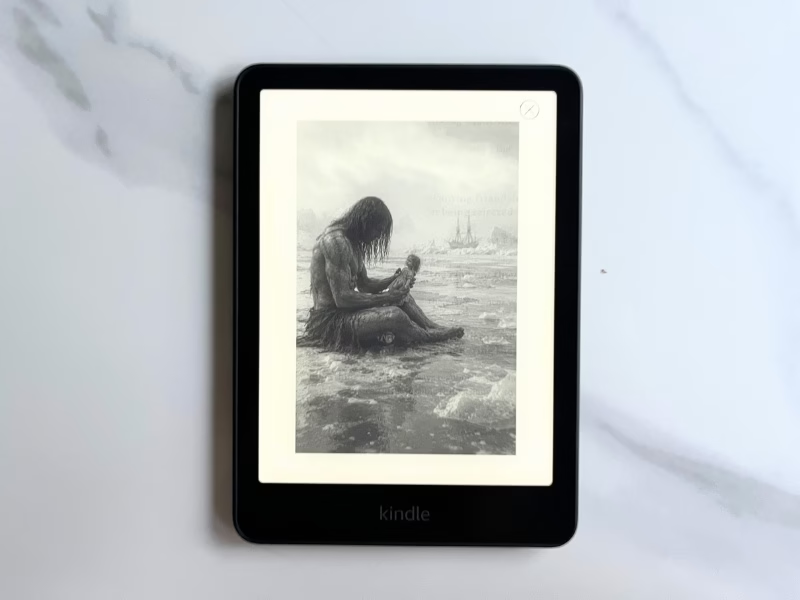
The creature in Frankenstein spends a large part of the story trying to speak to people and make friends. However, one glance at his appearance causes everyone he meets to panic and attack him. There is one person who listens though, a blind man who is unable to see his appearance.
The message is very clear: don’t judge someone based on their looks. After reading, the questions prompted my children to talk about people they have treated differently. Now we can connect their experience to the creature’s struggles, helping them understand how hurtful these judgements can be.
Lesson 3: Understanding revenge and anger
Let me provide a little context. I have two children, one girl and one boy. Every day something happens between them that prompts some act of revenge. Whether it is stealing back some food, messing up a drawing, or actually getting physical. Most events are followed with: “But he did it first!”
This is part of growing up, and I’m not saying these events have magically stopped since reading Frankenstein. The story clearly outlines why people might seek revenge why nothing good comes of it. It also teaches them that whoever “did it first” is not the real issue.
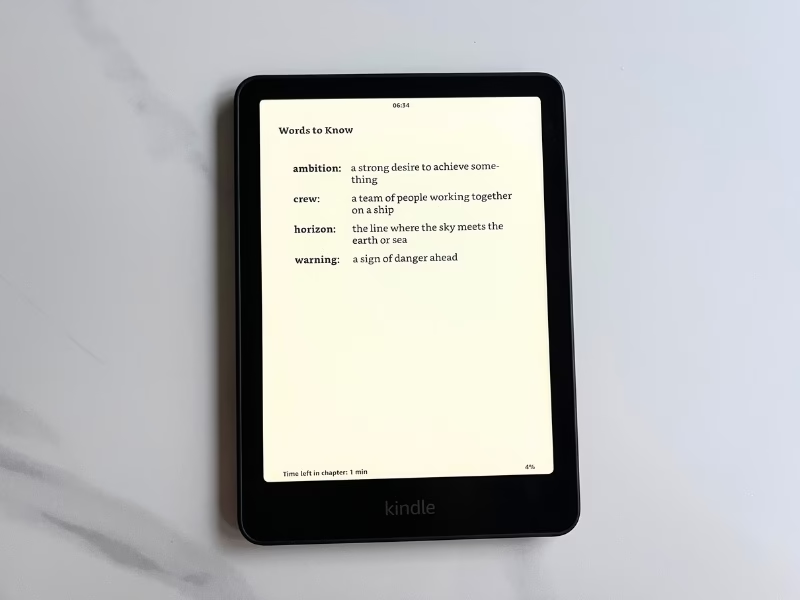
And they now know the word ‘revenge’ thanks to the glossary in the book and the repetition of the word in the story. They now have the vocabulary to describe their emotions, which helps them understand and communicate those feelings more clearly.
Lesson 4: Understanding Intention and consequence
Kids are well meaning. But their best intentions don’t always end up that way. Think of the DIY milkshake that covers your kitchen floor, or that family photograph that is now a collage in your child’s notebook.
It is difficult to remain level-headed in these moments because we know that they are usually done with kindness. But as parents we also can’t help ourselves from giving a mini-lecture sometimes.
In Frankenstein, Victor sets out to stop death so that he can help people who have lost loved ones like he did. His blind ambition prevents him from considering the consequences of what this might actually look like and who else it might affect.
“But he is trying to help,” I say.
“Trying to help is not the same as helping, not if he makes a big mess,” I hear back.
The lesson here is not to stop our children from trying to help or do nice things, but for them to see the different outcomes their actions might produce.
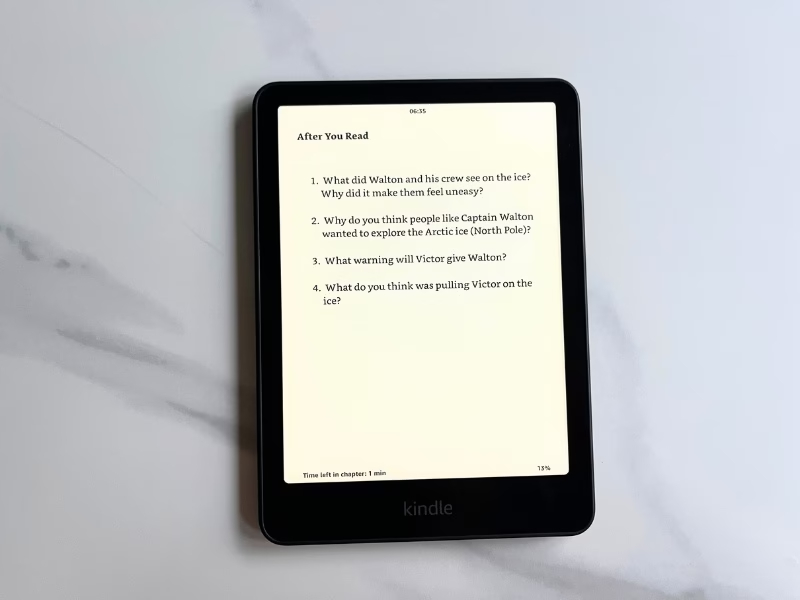
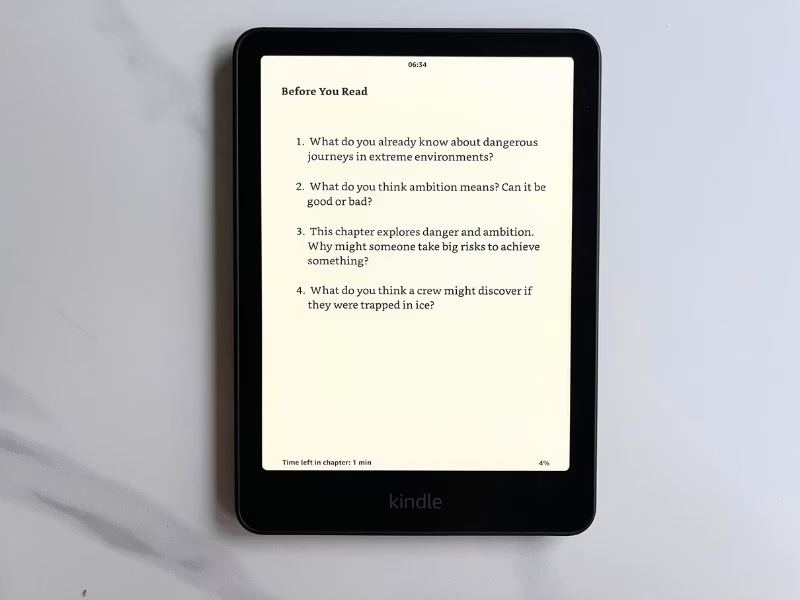
The questions before and after each chapter helped my children think beyond the plot and gave me an easy way to start meaningful conversations.
You can read more about why using pre-reading questions and prompts are so important to raising curious readers .
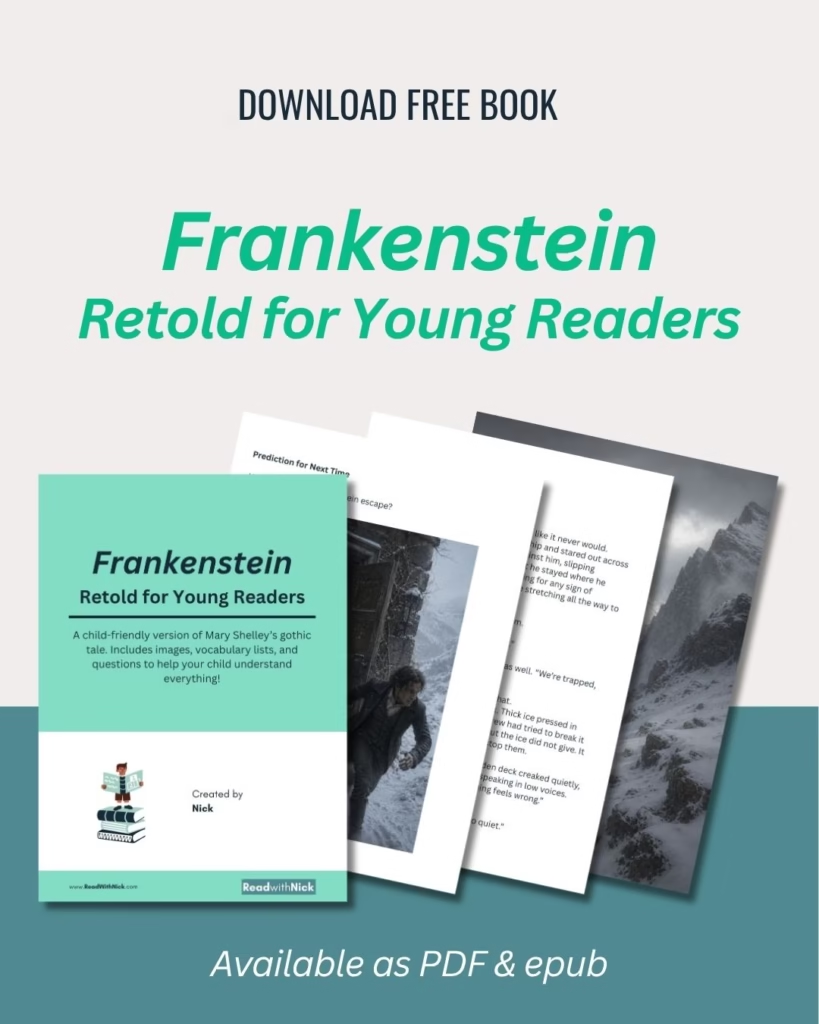
The Frankenstein for Young Readers I created
“But Frankenstein is a gothic horror, it takes around four hours for an adult to read and contains scenes that may be too violent for children.”
This is true for the original text. The version I created for my children is much more suitable for young readers.
What is different about this version?
Like my adaptation of The Iliad, this version includes several features designed for young readers.
Accessibility
- Simplified language (Grade 7) without losing the story’s core ideas
- Suitable for children as young as 5 when read aloud
- Short 10-minute chapters that fit easily into a bedtime routine
Learning Support
- Discussion questions before and after each chapter
- Vocabulary definitions that build language naturally
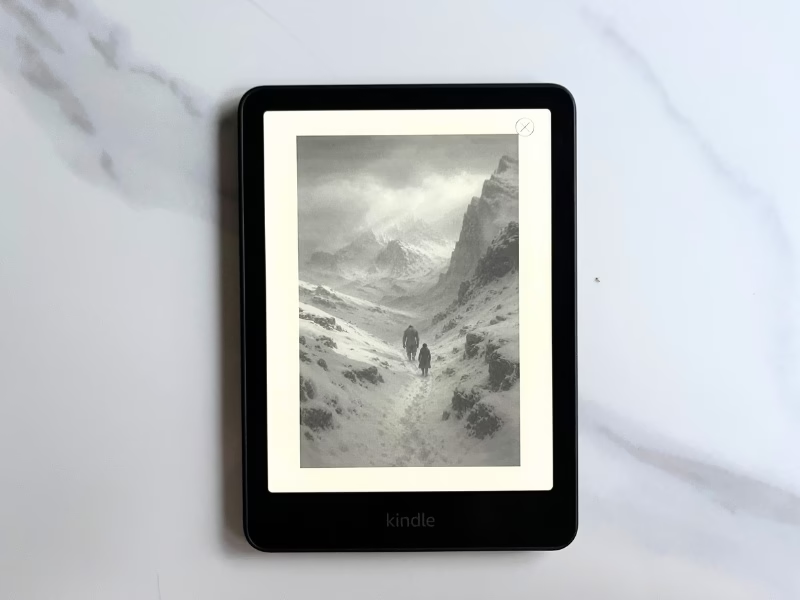
- Chapter artwork that encourages prediction and discussion
Content Adaptation
- Violence occurs off-page
- No blood or gore described
- Violent events are only hinted at, allowing parents to choose how much to discuss
Why read the classics to children?
I didn’t start this project because I wanted my children to become literary experts. I simply wanted them to experience some of the stories that have shaped our culture for centuries.
Classics show us that today’s problems are not new, they are simply packaged differently. We sometimes underestimate the thinking capacity of children, and think they won’t be able to understand complex issues.
Frankenstein helped my children think about responsibility, compassion, revenge and consequences. I believe many children are capable of exploring these same ideas when given the opportunity.
If you’d like to start these conversations with your own child, you can download your free copy of Frankenstein for Young Readers below.