
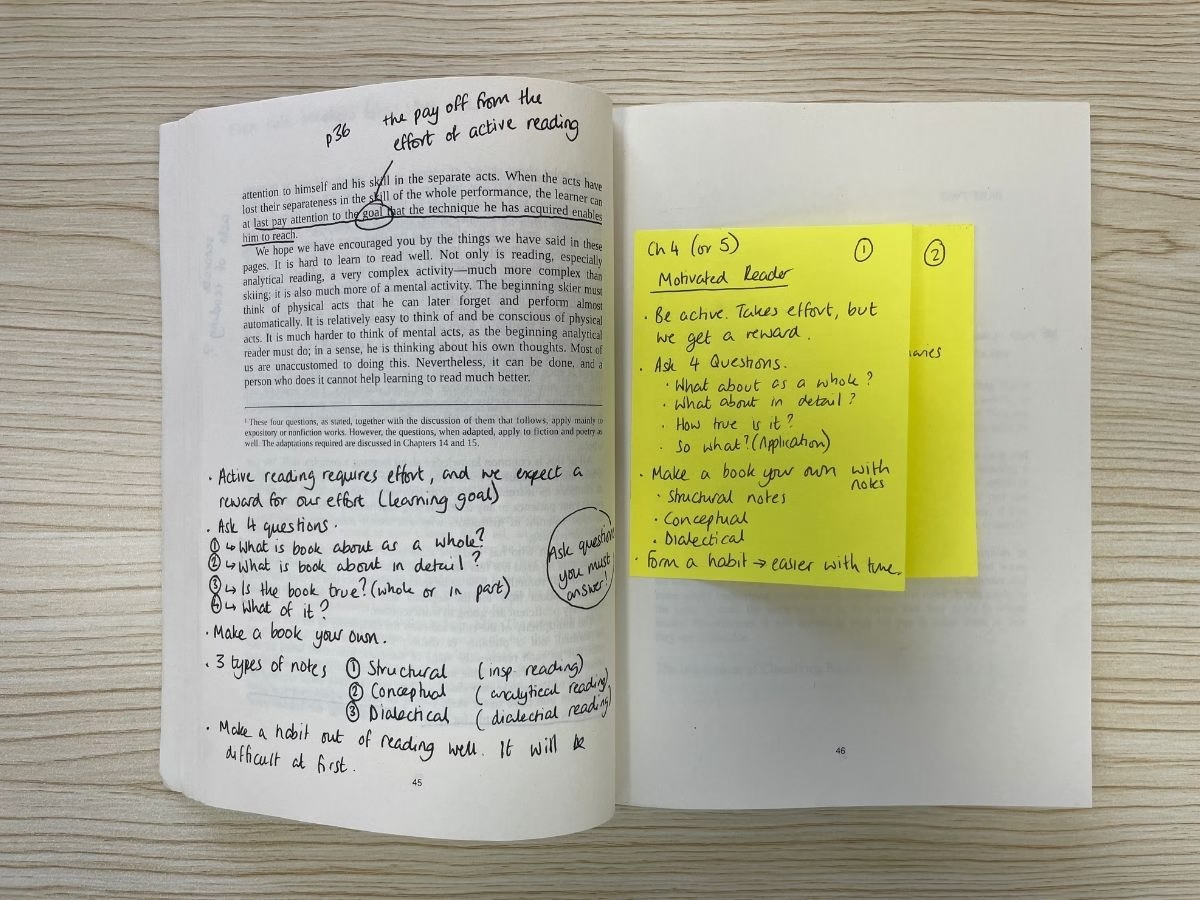

Why reading feels harder than it should
Have you ever been half way through the first chapter of a book and wondered how you got there? Yet you’re able to remember a useless fact about the latest movie franchise you secretly enjoy bingeing.
The problem isn’t the book, or even you. Our brains find it easier to learn things connected to what we already know, and harder to learn something completely new.
There are plenty of examples of this in everyday life. Learning your 101st song on the piano is easier than learning your first. Picking up a new word in a language you have studied for years is easier than remembering a catchy phrase from an unfamiliar one. And remembering trivia from your favourite fictional series comes quicker than recalling the minutes from your last work meeting.
The reason we find it easier to learn when we have an existing knowledge base is down to something called a schema.
In this post you’ll learn:
- What a schema is and why it matters.
- Simple ways to activate your schema before reading.
- How to maintain your schema for better long-term understanding.
Jump ahead:
What is a schema?
There is a scientific explanation of schemas and how they work in our brain. If you’re curious, you can explore that here.
But what we need is a simple explanation.
Think of a schema as a net, ready to catch all of the new information that you are reading.
As you learn more, the net grows. A bigger net catches more information. As it grows again, you’re ready to understand even bigger ideas.
You have many different schemas in your mind for all of the different things you know. There are schemas of your family history, politics, your favourite holiday destination, Harry Potter and even things you wish you’d rather forget.

(Image credit: Microsoft Azure, from reviewing.blob.core.windows.net)
How does a schema actually work in the brain?
When not in use, this schema ‘net’ is folded up nice and small. If you don’t open it before learning, it will be very difficult to work effectively.
But if you spend a little time before learning to unroll it and cast it wide, you will find it easier to catch, retain, and understand the new knowledge.
Classroom teachers often start lessons by helping students activate what they already know. They unroll a schema by activating prior knowledge. When the brain knows what is coming, it begins to predict what it will learn.
This prediction increases attention. Your mind begins to focus and filters only the ideas that matter. As your schema catches new information, your understanding deepens. The net grows stronger and larger.
Because your schema is catching all of this new information, your understanding on the subject deepens because the new information is able to add to the size of the net.
The more connections you make with the new information, the more parts of the net it will become connected to. This makes the information harder to forget.
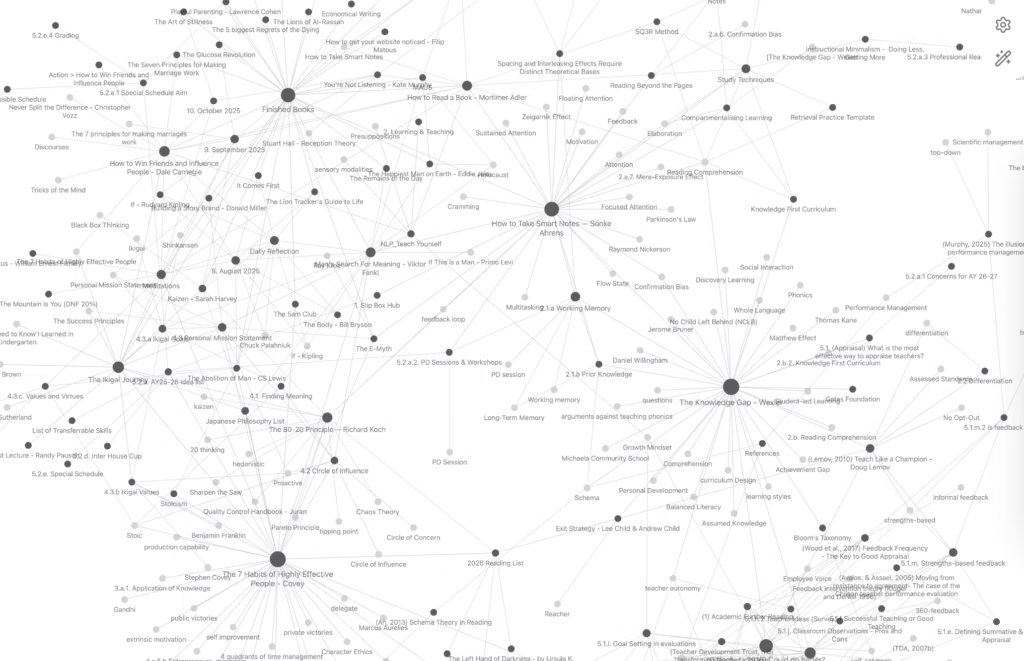
Here’s what learning looks like with and without an activated schema:
| With an Active Schema | Without an Active Schema |
|---|---|
| New information goes into the mind. | New information goes into the mind. |
| An active schema is prepared for incoming information. | An inactive schema is not ready for the incoming information. |
| The schema is able to catch the information. | The information passes the schema by. |
| The schema builds connections with the information, making it harder to forget. | The information is lost and unable to be recovered. |
| You learn easily. | You don’t learn easily. |
Why does a schema matter for learning?
Activating the right schema before reading makes learning easier and more memorable.
Studies show that:
- You remember more of what you read
- Reading on the same topic becomes easier over time
- You rely less on rereading or highlighting to understand
- You read faster because fewer ideas feel unfamiliar
The only downside is that activating your schema takes a few minutes before you start reading. But when you treat schema activation as a part of learning, those few minutes save hours of rereading later.
How to activate a schema before reading?
So what can we actually do before we start reading? First, remember that activating your schema is part of learning. There are many ways to do this, and you can experiment to find what works best.
Here are some techniques you can try before you start reading:
Ask Questions
Ask yourself what you already know about the topic. Simple questions like “Where have I seen this before?” and predictions like “What questions do I expect this text to answer?” can go a long way.
Overview
Watch a short summary video on YouTube. This can help when you are starting an unfamiliar topic. A quick overview gives your mind a basic frame so new ideas are easier to organise.
Preview
Preview the upcoming chapter. Skim through the pages and look at the section headings. This will give you a general idea of the direction the chapter is heading and your brain can start preparing. This technique is a great way to set your reading purpose. Turn those subheadings into questions and your mind will start looking for answers.
Recap
Recap the previous chapter or what you have learned so far from the book. Recalling what you read, even when difficult, allows you to reconnect with the main ideas without starting from scratch. Adding some simple retrieval practice techniques or applying the SQ3R method before reading will help you dive deeper into what you already know about the topic.
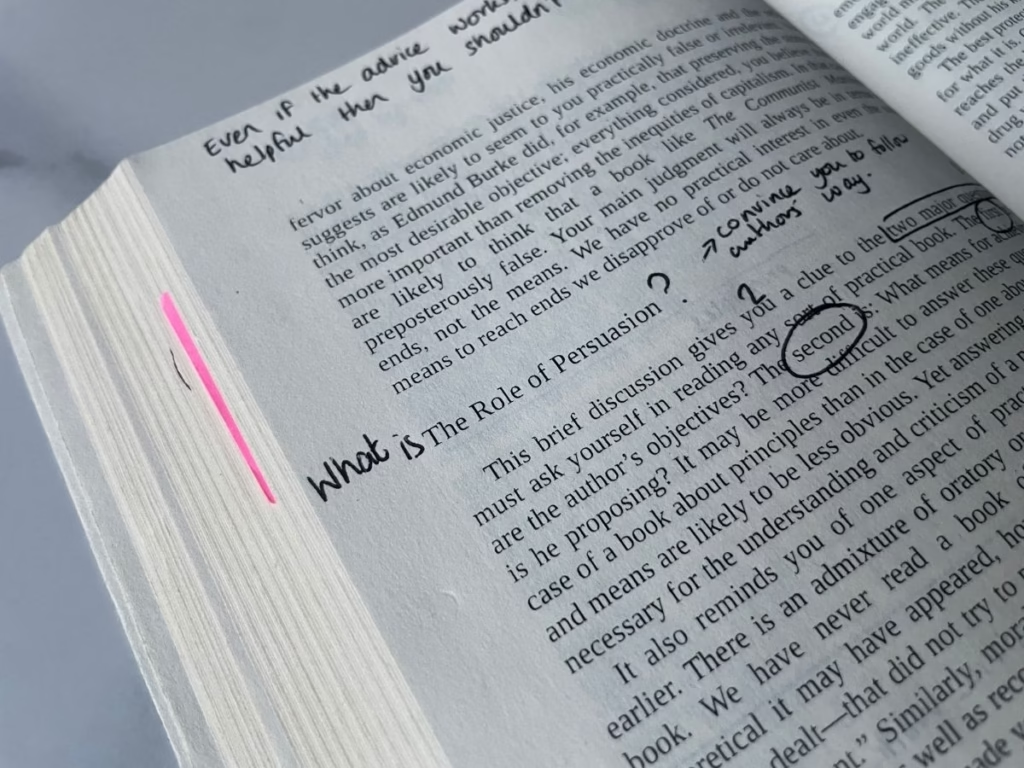
How to maintain and update a schema while reading?
There are a few things you can do while reading, or just before you put your book down, that will help you the next time you pick it up.
Write
At the end of reading, write a short summary of what you just read. You can also write one or two questions to answer next time. These reminders will help you reconnect with your previous reading quickly.
Pause
While reading, pause to check if your earlier predictions were correct. These short pauses help your brain check understanding and strengthen memory. The short rest will also make it easier to continue reading.
Connect
Finally, you can connect ideas to existing knowledge. If you come across something that you have read elsewhere, make a note of it. Connections make information harder to forget, and the more connections, the more your schema will grow and link with others.
Your schema in action
Now that you know how to activate your schema and why doing so improves your reading, here’s what your new reading routine might look like.
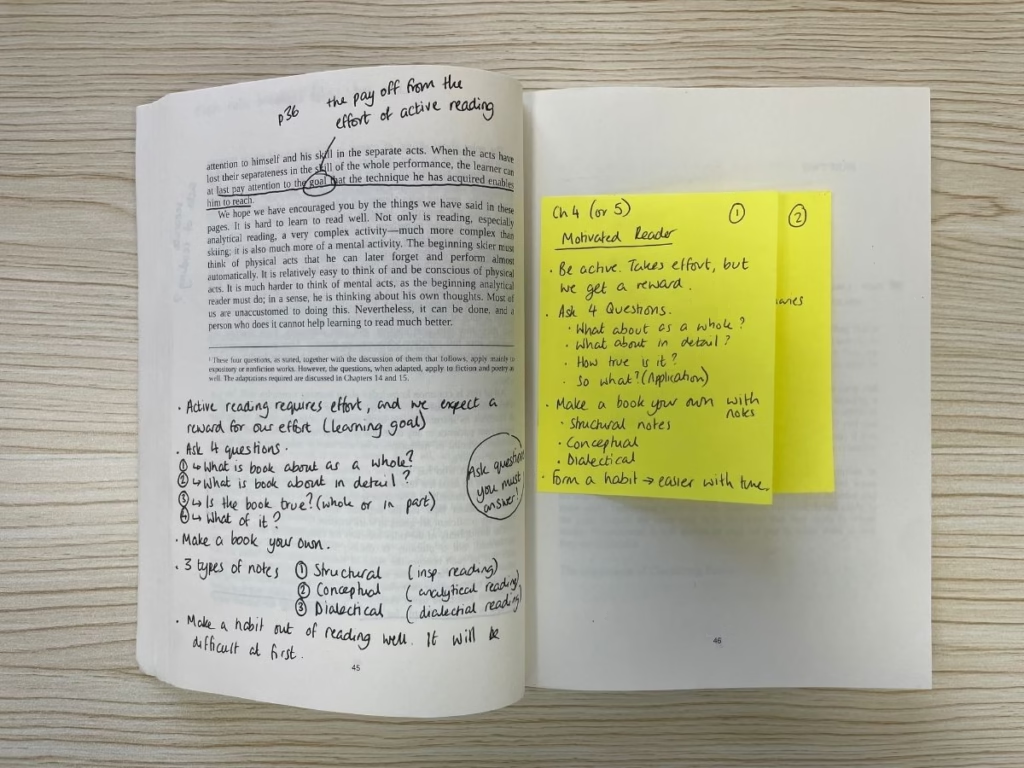
You pick up your book and skim to the right place. On the previous page is a Post-it note with a one-sentence summary that reminds you of the biggest takeaway from the previous chapter.
Next to the summary are two questions. One asks how you’ve tried to apply the takeaway to your life since yesterday. The other asks if you still agree with the author.
After this check-in, you are ready to start the new chapter. First, you skim the subsection headings and begin picturing what the author will explain.
Now you begin reading. At the end of each subsection, you pause to recap what was said and whether you agree with the author. One idea reminds you of a book you read last month, so you note the title in the margin and write a few words linking the two.
Finally, after finishing the chapter, you spend two minutes writing a summary and two more questions for your future self.
This is how to read to remember.
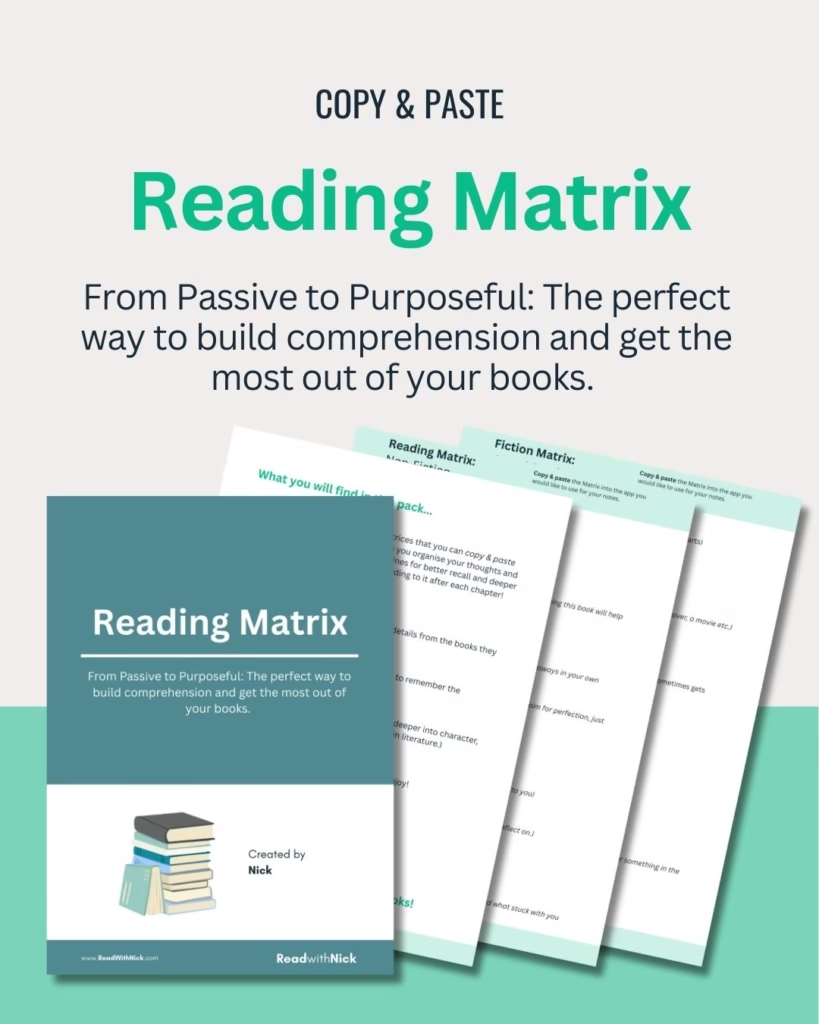
A digital Reading Matrix can help you organise your ideas, remember key takeaways, and prolong your understanding.
You can access these templates for both fiction and non-fiction books. Simply copy and paste them into a notes app of your choosing
Whether you’re reading to learn or to escape, there’s a version that fits your style.
Leave a Reply